A transformer language model computes a deep hidden state for every token but uses it only to sample that token. Existing latent-feedback designs, which feed hidden states back across tokens, are mostly built in during pretraining and gain little when added to a pretrained model. We introduce the temporal residual, a second residual stream that every sublayer reads and writes and that is carried from each token to the next. It adds 2,752 parameters to a 4.2B-parameter model and starts exactly at the pretrained network.
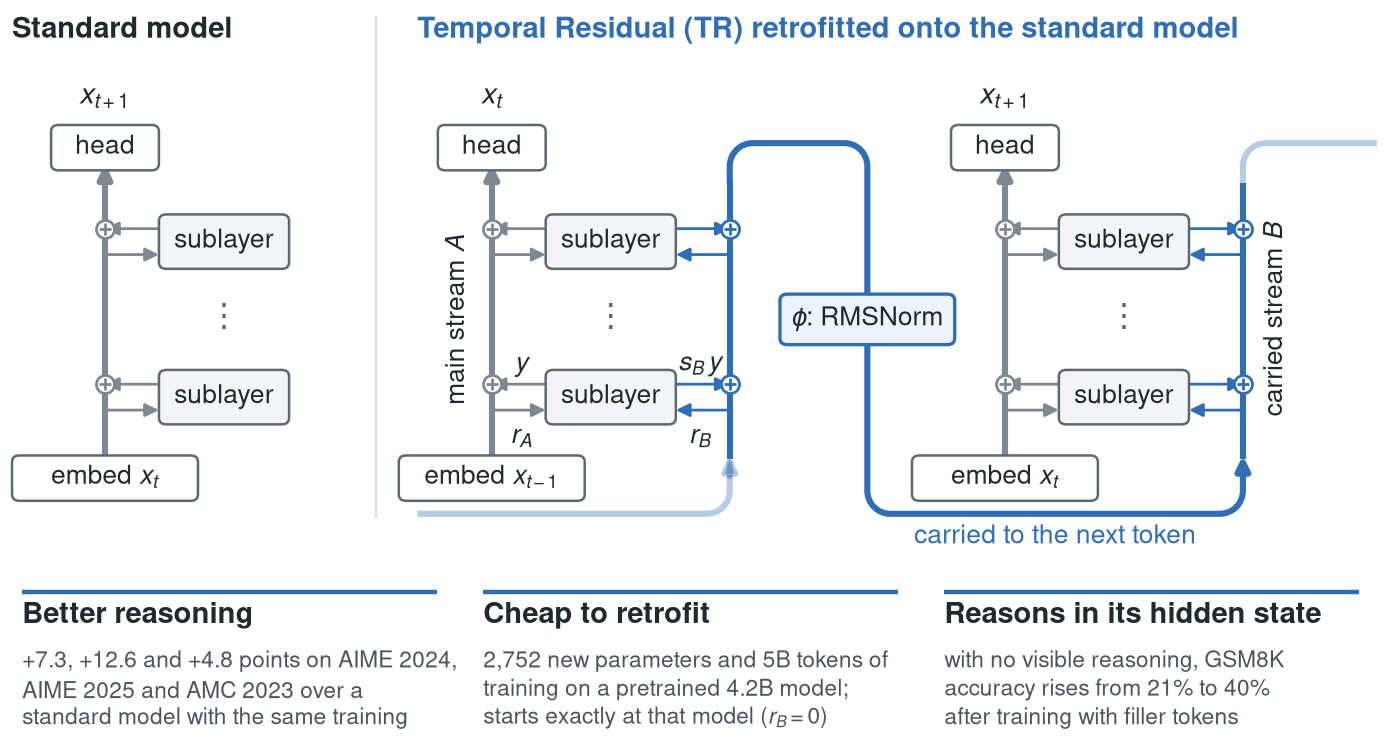
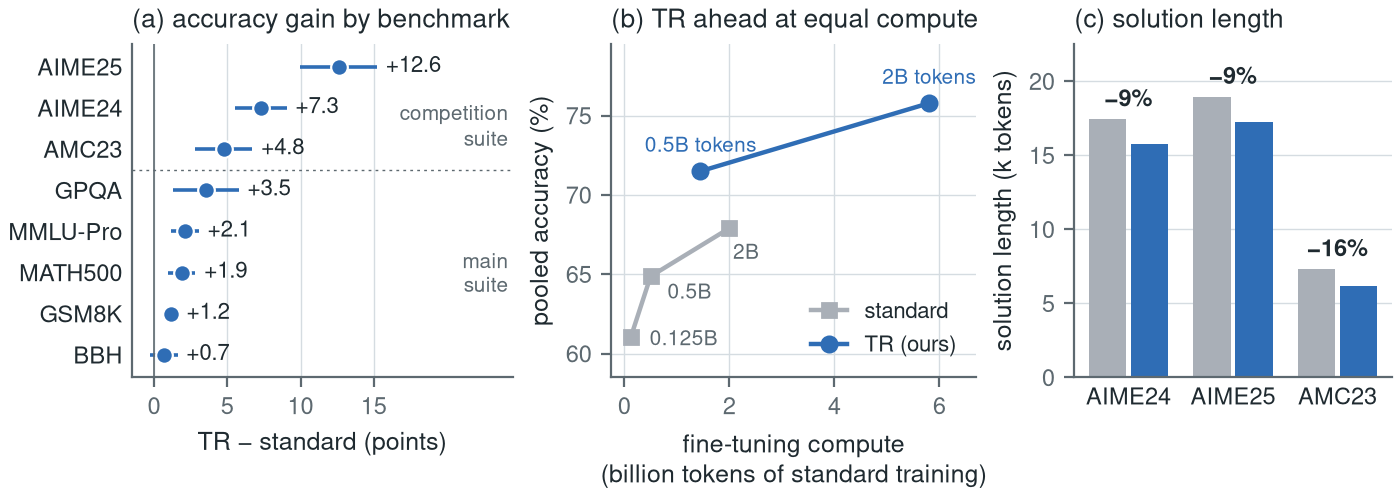
Retrofitted onto Qwen3.5-4B-Base with 5B tokens of training, it beats a standard model trained on the same data by 7, 13 and 5 points on AIME 2024, AIME 2025 and AMC 2023, writes shorter solutions, and stays ahead at matched training compute. The separate stream matters: prior designs that feed state into the existing stream recover at most 40% of the gain when retrofitted. Validation loss can mislead: the recipe with the lowest loss gains nothing at decoding. Trained with filler tokens in place of reasoning, the model reasons in its hidden state: its GSM8K accuracy with no visible reasoning rises from 21% to 40%, and falls back when the carried state is zeroed.